What every influencer media kit needs to land brand deals in 2026
Learn what to include in an influencer media kit, how to structure it, and what brands look for before saying yes.
An influencer media kit is the document that determines whether a brand takes a creator seriously or moves on to the next pitch.
The good news for smaller creators: follower count is not the deciding factor. Brands care far more about audience fit, engagement quality, and proof of past results.
A micro-influencer with a tight niche, a well-built kit, and a documented campaign result will land more deals than a creator with ten times the following and a generic PDF.
What an influencer media kit actually is
A media kit is a concise, professionally designed document - typically one to two pages - that gives brands everything they need to evaluate a creator quickly.
Think of it as the resume that gets sent before the job interview, except the job is a paid brand partnership.
Its core purpose is to answer three questions every brand is silently asking when they open it:
Who is this creator and who is their audience?
What results have they delivered for other brands?
What would working with them look like in practice?
A kit that answers all three clearly and quickly is doing its job. One that buries the lead in a long bio or fails to include performance data gets skimmed and closed.
What to include: section by section
The structure of a media kit matters as much as the content. Most creators lead with a bio - but according to creators who regularly close brand deals, brands care most about case studies and proof of results.
The bio belongs at the end, not the beginning.
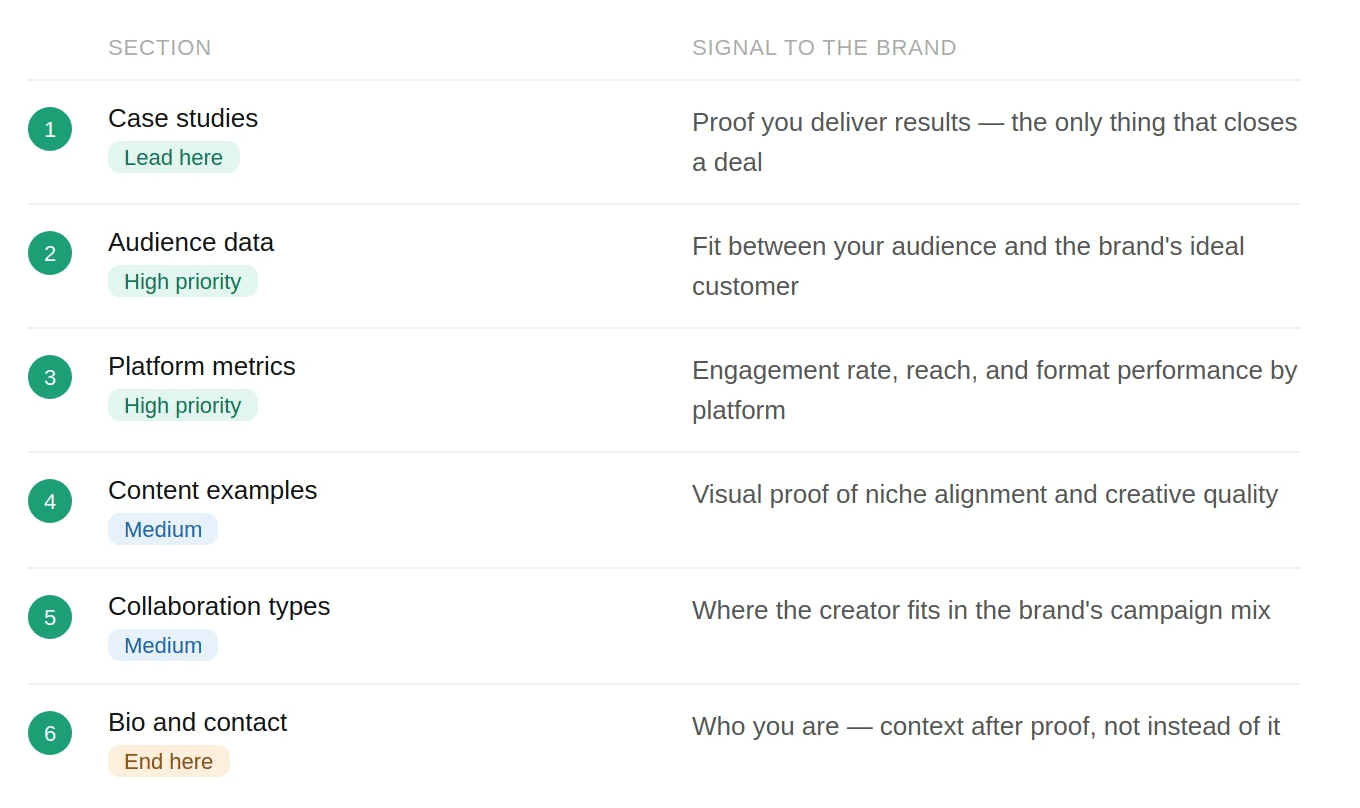
A high-performing media kit in 2026 follows this order:
Case studies first: one or two examples of past brand campaigns with concrete results: impressions, engagement rate, link clicks, or sales generated. If no paid campaigns exist yet, a strong organic post with documented performance works just as well
Audience data: demographics including age range, location, and interests. A smaller but well-defined audience is often more compelling than a large but scattered one
Platform metrics: follower counts, average engagement rate, average reach per post, and content format performance. On Instagram, Reels typically drive 4–7% engagement compared to 2–4% for feed posts in 2026. On TikTok, watch time and completion rate matter more than follower count
Content examples: screenshots or links to three to five strong pieces of content that represent the creator's best work and niche alignment
Collaboration types: a clear list of what the creator offers: Instagram Reels, Stories, TikTok videos, UGC content, product photography, affiliate partnerships. This helps brands see where to fit the creator into their campaign mix
Bio and contact: a brief, third-person bio of 50–100 words, a professional photo, and a business email. Keep this section short
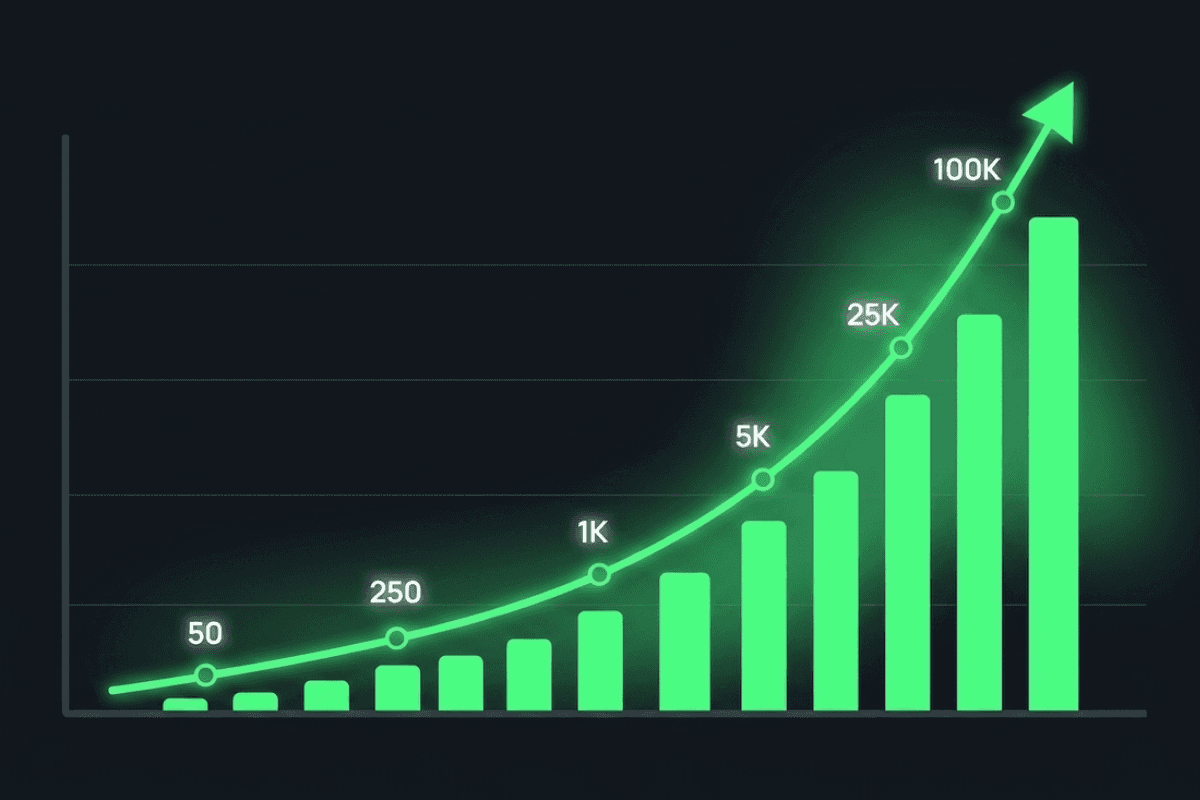
The visual below maps each section against what it communicates to the brand reviewing the kit.
Sections that brands actually read - in order:
The most common mistakes that kill media kit performance
A media kit that follows the right structure but makes avoidable errors will still underperform. The mistakes that appear most consistently in kits that fail to close deals are:
Leading with the bio: brands skim media kits in the first 15 seconds. Starting with a personal story before showing proof of results loses the reader before the important section arrives
Outdated metrics: old follower counts, stale engagement rates, and screenshots from two years ago actively reduce credibility. Kits should be updated every three to six months at minimum
Focusing on followers instead of engagement: recent market research shows that average Instagram engagement in 2026 sits around 3–4%. In that context, creators with 7–8% engagement are performing well above the baseline - and should lead with that metric over follower count.
Overdesigning: heavy visuals, complex layouts, and dense decoration distract from the data brands actually need. Clean and readable consistently outperforms visually impressive but hard to parse
Including a rate card: pricing before the brand understands the value is a deal-killer. Rates belong in a separate conversation after the kit has established fit
Should you include pricing in your media kit
This is the most debated question among creators building their first kit - and the answer has shifted.
Most practitioners now recommend keeping pricing out of the kit entirely and addressing it in follow-up once the brand has expressed interest.
Including rates too early anchors the negotiation before the creator has had a chance to demonstrate their value and understand the scope of what the brand needs.
A simple note at the end of the kit covers it well: "Rates vary based on deliverables, usage rights, and exclusivity. Happy to share a custom proposal."
This keeps the door open without locking in a number prematurely.
How media kits connect to gifting programs on Shopify
From the brand side of this equation, a creator's media kit is also what separates a seeding program built on guesswork from one built on qualified selection.
Brands running product seeding campaigns on Shopify use the information in a creator's kit - engagement rate, niche alignment, audience demographics - to decide whether a send is worth making.
A well-built kit removes the back-and-forth and accelerates the decision.
Once a creator is approved for a gifting send, the operational layer kicks in. Rather than collecting addresses and product preferences through DMs, brands using Influencer Gift Form send creators a single secure link.
The creator fills out their preferences, and a $0 Shopify order is created automatically - no manual entry, no lost details.
For creators, this experience signals that the brand is organized and professional, which itself increases the likelihood of a genuine post.
For a deeper look at what brands evaluate when selecting creators for gifting sends, this guide on how to get PR packages covers the full qualification process from the creator side.