Gifts for Influencers: What to Send & How to Scale
Not sure what to send influencers? Learn how to choose the right gifts, package them for impact, and deliver at scale to maximize your gifting campaign results.
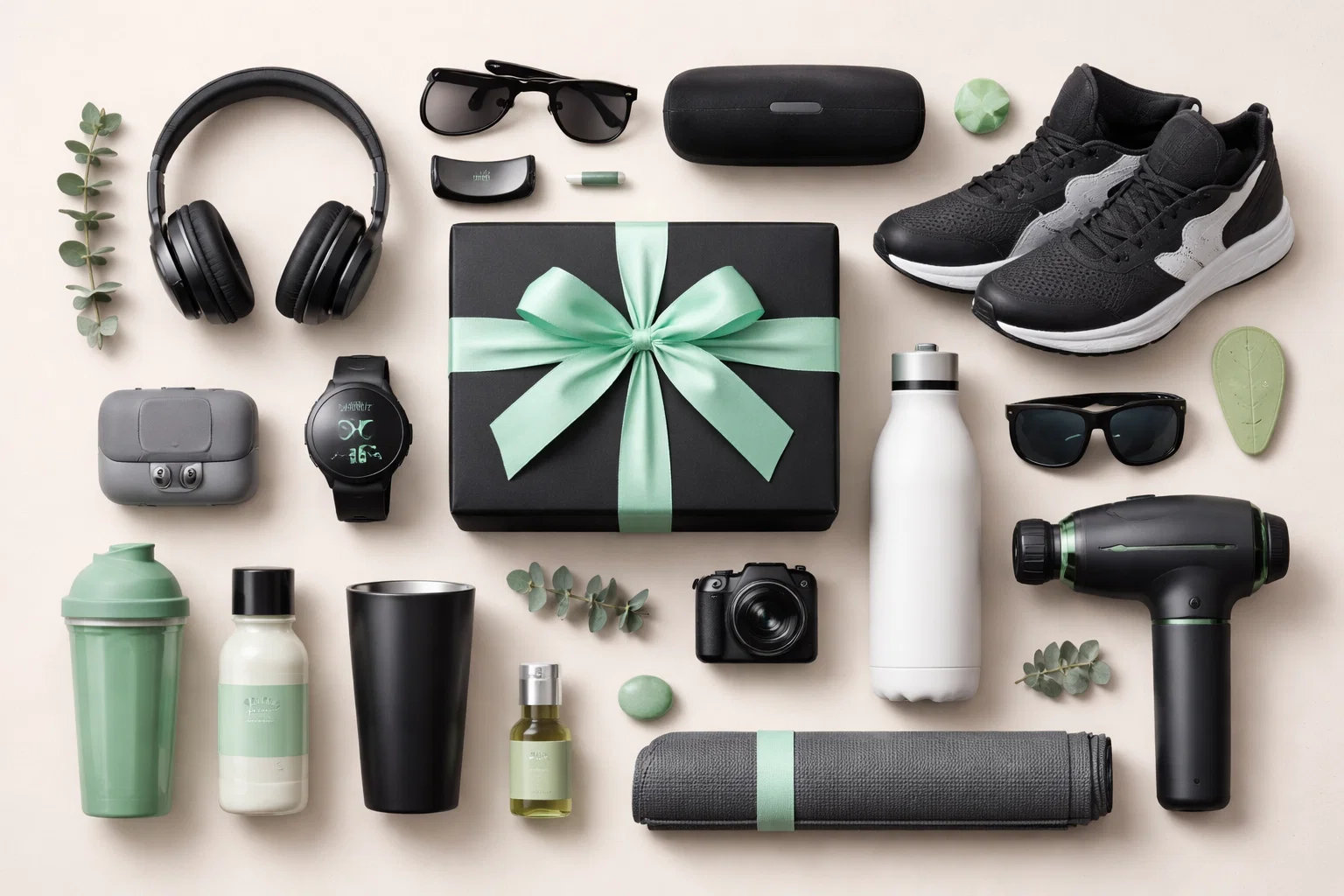
Choosing a gift for influencers is not a packaging problem. It is a strategy problem.
Brands that see strong returns from gifting campaigns are not necessarily sending more expensive products - they are sending the right ones, to the right creators, in a way that feels like a genuine gesture rather than a marketing transaction.
Most gifting programs fail at the selection stage. The product goes out, the creator receives it alongside a dozen other packages that week, and nothing gets posted.
Not because the product was bad, but because nothing about the send gave the creator a reason to care. The fix starts before anything ships.
What actually makes a good gift for influencers
The best gifts for influencers share four characteristics that have nothing to do with price point.
A product that hits all four is far more likely to earn organic content than one that simply looks impressive in a box.
The first characteristic is genuine usability.
Products that fit naturally into a creator's existing content - something they would reach for on camera, wear in a routine video, or use in a context their audience already sees regularly - perform significantly better than novelty items that have no place in the creator's actual life.
This is why micro-influencer gifting works so well when creator selection is tight: the product arrives in a context where it genuinely belongs.
The second characteristic is visual appeal.
Social content lives or dies on how it looks, and products that photograph or film well give creators natural material to work with. It means clear, distinctive, and easy to show in motion.
The third is a personalization signal.
A creator who receives a product that clearly reflects their content, their aesthetic, or even their name in the packaging feels seen rather than targeted. That distinction matters enormously to whether they post.
The fourth is low friction to use.
Products that require complex setup, lengthy explanation, or significant time investment before the creator can actually experience them rarely generate content.
The easier the first impression, the faster the organic moment happens.
What types of products work best for influencer gifting programs
Not every product category performs equally in gifting campaigns.
The categories that consistently generate the highest posting rates share one trait: the product experience is immediate, visible, and easy to communicate on camera.
The categories that perform best across influencer seeding programs are:
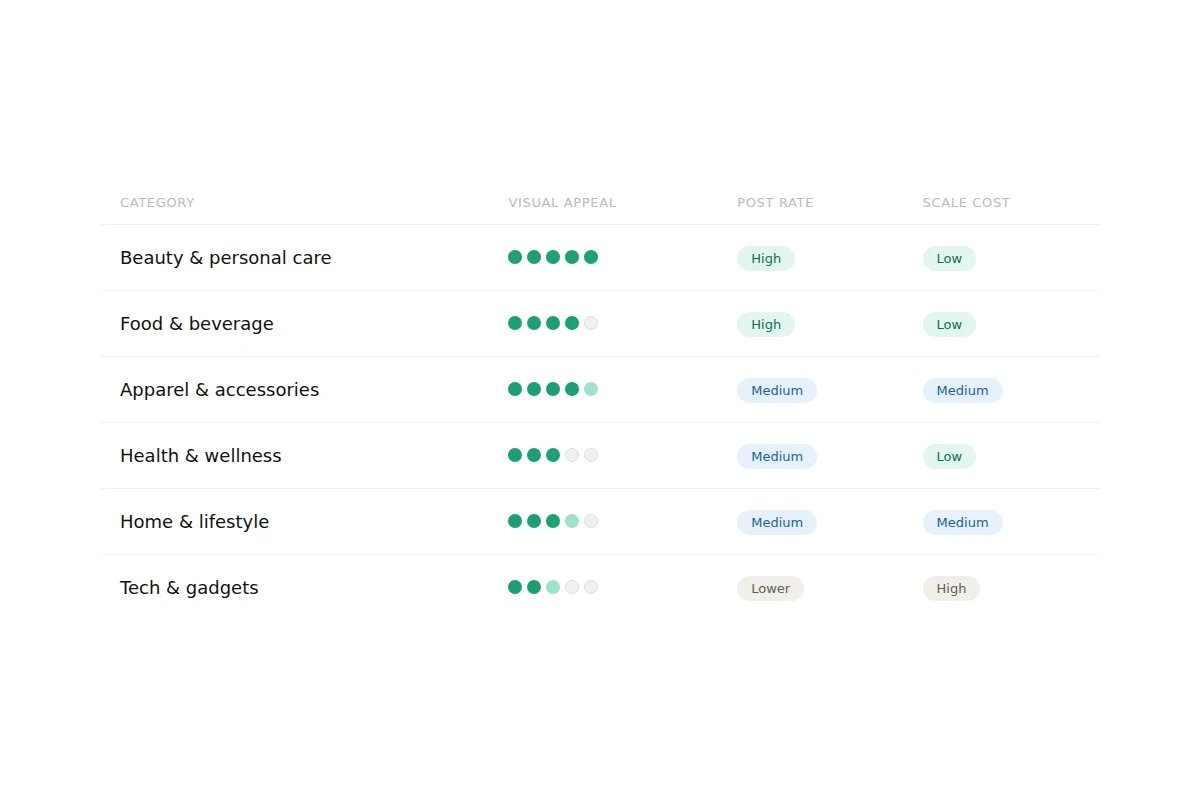
Beauty and personal care - immediate before/after, easy to demonstrate on camera, high relevance across lifestyle, fitness, and wellness niches
Food and beverage - strong visual content, taste reactions are inherently authentic, easily incorporated into daily routine content
Apparel and accessories - natural fit-check content on TikTok and Instagram, high shareability when the product has a distinctive aesthetic
Health and wellness - strong alignment with creator communities built around habit and routine content
Home and lifestyle - performs well with interior, decor, and productivity niches where product integration feels organic
Products with a high cost of goods sold are harder to run at volume, which limits reach.
The brands with the most efficient gifting programs tend to send mid-range products - valuable enough that the creator feels the gesture, affordable enough that the program can scale to 50, 100, or 200+ sends per month without the budget collapsing.
What the ideal product mix looks like depends entirely on campaign goals, creator niche, and program scale.
The chart below maps product categories against the key factors that determine gifting performance - so the selection decision has a framework behind it, not just instinct.
Gifting performance by product category:
How to make the gift experience stand out
A product that qualifies on all four criteria above can still underperform if the delivery experience is forgettable.
Creators receive multiple packages every week - according to Later's creator survey, 74% of influencers receive multiple gifted products each month.
Standing out in that context is less about spending more and more about making the send feel intentional.
Three elements consistently separate memorable gift sends from forgettable ones:
Personalized packaging or note - a handwritten card that references the creator's actual content, a product color chosen to match their aesthetic, or packaging that includes their name signals that the brand paid attention. This single detail is cited by 82% of creators as a factor that influences whether they engage with a gift
A clear but low-pressure context - a brief card that explains why the brand chose this creator, what the product is for, and what the brand hopes (not demands) the creator thinks of it. No script, no required hashtags, no posting deadline
Creative assets as optional support - a one-pager with key product benefits, suggested hashtags, and a few content angle ideas gives creators who want to post a starting point, without making those who do not feel like they owe something
This is also where influencer PR package strategy becomes a discipline in itself - the unboxing experience is often what determines whether a creator's first instinct is to film or to set the package aside.
How to send gifts to influencers at scale without the operational chaos
Knowing what to send is the strategic layer. Getting it sent - at volume, without errors - is the operational one.
This is where most DTC brands on Shopify hit the wall, because the process of collecting shipping addresses, product preferences, and size information from dozens of creators through DMs is not a workflow.
It is a time drain that compounds with every new send.
The standard manual process looks like this: reach out via DM, wait for a response, ask for address and size, wait again, copy the information into Shopify, create a $0 order manually, hope nothing got lost in the thread.
At 10 creators a month, this is annoying. At 50, it is a part-time job. At 200, it breaks.
Influencer Gift Form replaces that entire sequence with a single secure link. The creator opens the link, sees the brand's gifting form, selects their product preferences, enters their shipping address, and submits.
A $0 order is created inside Shopify automatically - no copy-paste, no manual entry, no missed details.
The brand team is removed from the logistics entirely and can focus on the relationship layer instead.
This operational shift is what allows gifting programs to scale from 10 creators to 300 without adding headcount - and it is what separates brands running gifting as a system from those running it as a recurring manual task.
For brands comparing tooling options before scaling, this overview of top influencer gifting platforms covers the key differences between purpose-built tools and all-in-one platforms.
Sending the right gifts builds the right pipeline
The brands that get the most out of influencer gifting are not the ones with the most creative packaging or the highest product budgets.
They are the ones that treat each gift as the opening move in a longer relationship - and build the infrastructure to sustain that relationship at scale.
A well-chosen gift, delivered efficiently, to the right creator, starts something.
That something - whether it is an organic post, a UGC asset, an affiliate relationship, or a paid partnership - compounds over time in ways that ad spend alone never produces.
For brands that are serious about building a creator program from the gifting layer up, the product and the send are just the beginning.